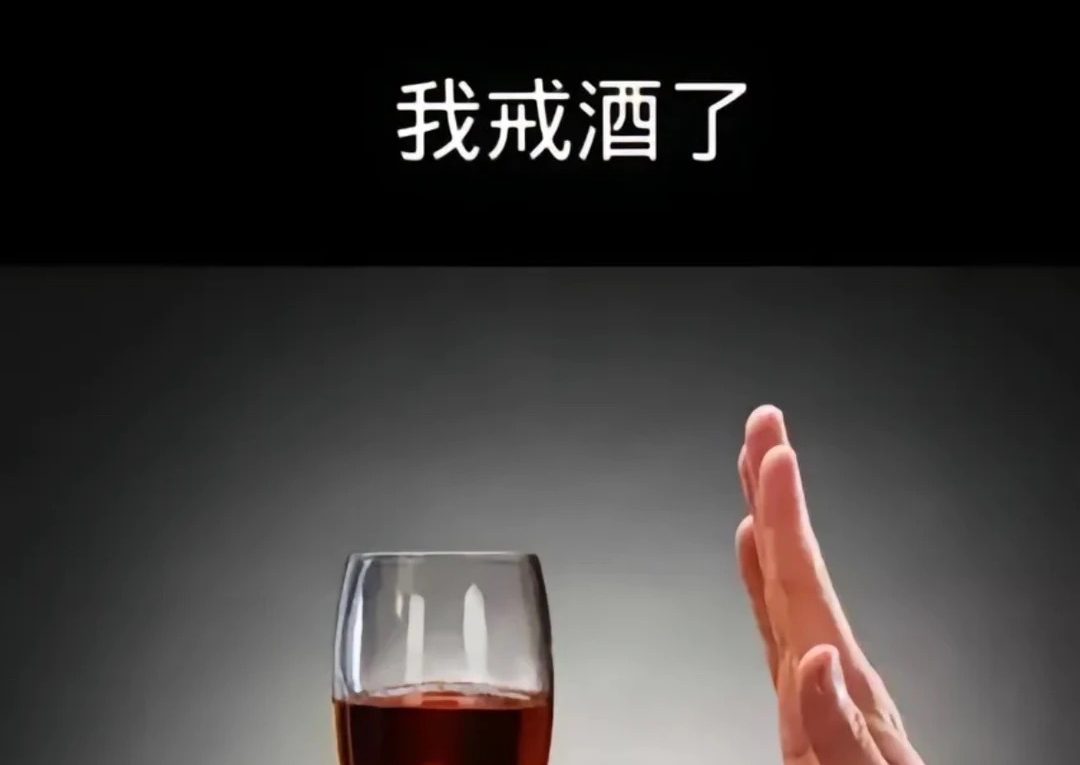
Quitting Alcohol in Midlife: The Best Gift You Can Give Yourself
There’s a ritual that a lot of guys in their 40s and 50s go through. It looks like this:
Another glass of wine after a long day. Another beer watching the game. Another drink at the company dinner. Another morning where you think: I’ll cut back soon. I should probably cut back soon.
It’s not that you’re worried. It’s not that it’s “a problem.” It’s just… there. Every day. Like background music you forgot was playing.
And then one day — maybe after a health scare, maybe after a rough morning, maybe after nothing at all — you think: What if I just… stopped?
Here’s what the research says about that decision: quitting alcohol in midlife might be the single most impactful thing you can do for your health, your relationships, and your second half of life.
And it doesn’t require a rock bottom. It just requires a Tuesday.
🍷 The American Relationship With Alcohol: When “Normal” Isn’t Healthy
Let’s be honest about something: in American culture, daily drinking is normalized to a degree that’s quietly dangerous.
A glass of wine with dinner. A couple of beers after work. “I don’t have a drinking problem — I just drink socially.” But the CDC defines “moderate drinking” as 2 drinks or fewer per day for men — and studies increasingly show that even this level carries measurable health risks over decades.
Here’s what we know:
- 🔬 Even 1–2 drinks daily increases overall mortality risk compared to lifetime abstention, according to a 2023 meta-analysis in The Lancet
- 🔬 Alcohol is classified as a Group 1 carcinogen by the International Agency for Research on Cancer — the same category as tobacco smoke and asbestos
- 🔬 Daily drinking, even at “moderate” levels, causes liver fat accumulation ( NAFLD) in up to 90% of regular drinkers
- 🔬 The brain shrinks at a faster rate in moderate drinkers than in abstainers — measurable on MRI
“Normal” drinking isn’t as safe as we’ve been told. And for many people in midlife, the question isn’t “am I an alcoholic?” — it’s “what would my life look like without this?”
🫀 What Happens to Your Body When You Quit Alcohol in Midlife
Here’s the remarkable part: the body begins healing almost immediately after you stop drinking. And midlife isn’t too late — the body’s regenerative capacity is more powerful than most people realize.
Within Days: The Brain and Nervous System
After 24–72 hours of abstinence, the nervous system begins to recalibrate. Sleep quality improves dramatically — alcohol disrupts REM sleep, the most restorative phase. You’ll start waking up more refreshed, with clearer mornings.
Within Weeks: The Liver
The liver is the body’s most regenerative organ. A 2011 study in the Journal of Hepatology found that in people with alcohol-related fatty liver disease, liver fat content decreased by up to 50% within 4 weeks of abstinence. Inflammation markers (ALT, AST) normalize. For most people without cirrhosis, complete recovery is possible.
Within Months: Heart and Circulation
Alcohol raises blood pressure, disrupts heart rhythm, and damages the heart muscle over time. A 2020 study in the Journal of the American College of Cardiology found that former drinkers who quit showed significant reductions in blood pressure and resting heart rate within 3–6 months. Stroke and heart failure risk drops substantially.
Within a Year: Cancer Risk
This is the one that surprises people: alcohol-related cancer risk begins declining immediately after quitting. Oral, throat, esophageal, and liver cancer risks drop progressively. By 10–15 years of abstinence, the risk approaches that of a non-drinker for many cancers.
🧠 The Brain: What Quitting Does to Your Mind
Here’s what alcohol does to the brain over years of regular use:
- 📉 Gray matter shrinkage — MRI studies show that even “moderate” drinkers have measurably smaller brains than abstainers by midlife
- 📉 White matter damage — the nerve fibers connecting brain regions become less efficient
- 📉 Cognitive decline — processing speed, executive function, and memory all decline faster in regular drinkers
- 📉 Mood instability — alcohol is a depressant; daily drinking keeps the brain in a low-grade depressive state
The good news: much of this is reversible. A 2022 study in Brain Communications found that after 7 months of abstinence, former drinkers showed significant recovery in gray matter volume — particularly in the hippocampus (the memory center) and prefrontal cortex (decision-making and impulse control).
Men who quit drinking in midlife consistently report:
- 💡 Better mental clarity — clearer thinking, faster processing
- 😊 More stable mood — less anxiety, less irritability
- 😴 Deeper sleep — actually rested for the first time in years
- 🎯 Better focus — especially in the afternoon, where the post-lunch fog used to be
👨👩👧👦 The Ripple Effect: How Quitting Transforms Your Relationships
Here’s the part that doesn’t get discussed enough: alcohol doesn’t just affect your body. It affects everyone around you.
The emotional unavailability. The nights where you said something you shouldn’t have. The mornings where you’re not quite present. The slow erosion of intimacy that happens when one partner is always slightly checked out.
Men who quit drinking in midlife consistently report something unexpected: their relationships improve more than they expected.
- 🗣️ Better communication — when you’re not numbing emotions with alcohol, you learn to process them
- 👀 More present — you’re actually there for your kids, your partner, your friends
- 🤝 More trustworthy — no more wondering if you’ll say something you’ll regret
- 💪 More emotionally available — vulnerability becomes possible when you’re not running from feelings
A 2019 study in Couple and Family Psychology found that couples where one partner quit heavy drinking reported significantly higher relationship satisfaction, better communication, and fewer conflicts — with improvements visible within 3 months.
💪 Energy, Fitness, and the Body You Want at 50
Alcohol is calorie-dense and nutrient-depleting. It:
- 🍺 Adds 200–400 empty calories per day (that’s 1,400–2,800 per week — nearly a pound of pure fat)
- 🧪 Depletes testosterone — a 2014 study in Alcoholism: Clinical & Experimental Research found that just 5 drinks per week reduced testosterone levels in men
- 😴 Disrupts the muscle-building hormone response to exercise
- 🥵 Increases cortisol (stress hormone) — making fat loss harder and muscle building slower
When you quit, everything changes:
- ⚡ Energy levels surge — especially after the initial adjustment period (2–3 weeks)
- 🏋️ Exercise performance improves — better recovery, better sleep, better results
- 📉 Fat loss becomes easier — especially the stubborn abdominal fat that alcohol specifically promotes
- 💪 Muscle becomes easier to build — testosterone and growth hormone work properly again
🩺 What You Should Know Before You Quit
For most people, quitting alcohol is safe to do at home. But there are important considerations:
If You Drink Heavily (3+ drinks daily)
Do not quit cold turkey without medical supervision. Heavy alcohol dependence can cause dangerous withdrawal symptoms (tremors, seizures, delirium tremens). If you drink heavily, taper gradually under a doctor’s care, or enter a medically supervised detox program.
For Moderate Drinkers (1–2 drinks daily)
Quitting is generally safe to do independently. However:
- 📊 Get baseline blood work — liver function (ALT, AST, GGT), lipids, blood sugar, and a complete metabolic panel
- 🩺 Check in with your doctor — especially if you have any history of liver disease, heart conditions, or mental health concerns
- 💊 Review medications — some drugs interact badly with alcohol cessation (e.g., benzodiazepines)
The “What Now?” Problem
One of the most common challenges midlife men face when quitting: what do I do with my evenings?
This is real. Drinking is often a social ritual, a stress management tool, and a way to mark the transition from work to home. When you remove it, there’s a hole.
The solutions that work:
- 🍵 Replace the ritual: sparkling water with lime, a fancy non-alcoholic craft beverage
- 🏃 Exercise: the post-workout window is when the urge hits hardest
- 🧘 Meditation or breathwork: addresses the underlying stress that drinking was managing
- 👥 Social: find non-drinking social contexts — sports, hobby groups, early dinners
🎁 The Gift You Give Yourself
Here’s the reframe that changes everything: quitting alcohol isn’t about what you’re giving up. It’s about what you’re making room for.
More energy for your kids. More clarity for your work. More presence for your partner. More years with a functioning liver. More cognitive function in your 70s. More mornings where you wake up and feel genuinely good about yourself.
Midlife isn’t the beginning of the end. For millions of men, it’s the beginning of their best years — when they finally stop running from themselves and start actually living.
And sometimes, that starts with putting down the glass.
Not because you have to.
Because you finally see what you’re choosing.
The best gift you can give your second half
is your full, clear, present first half.
Have you quit drinking in midlife? What changed? What surprised you? Share your story below — it might be exactly what someone needs to hear tonight. 💬