Losing Too Much Hair? Your Body Is Sending You a Distress Signal
You wake up. You run your fingers through your hair. And three strands fall out. Then five. Then a handful.
You tell yourself it’s nothing. Seasonal shedding. New shampoo. Just stress. You’ve heard it all before. Hair falls out — that’s normal, right?
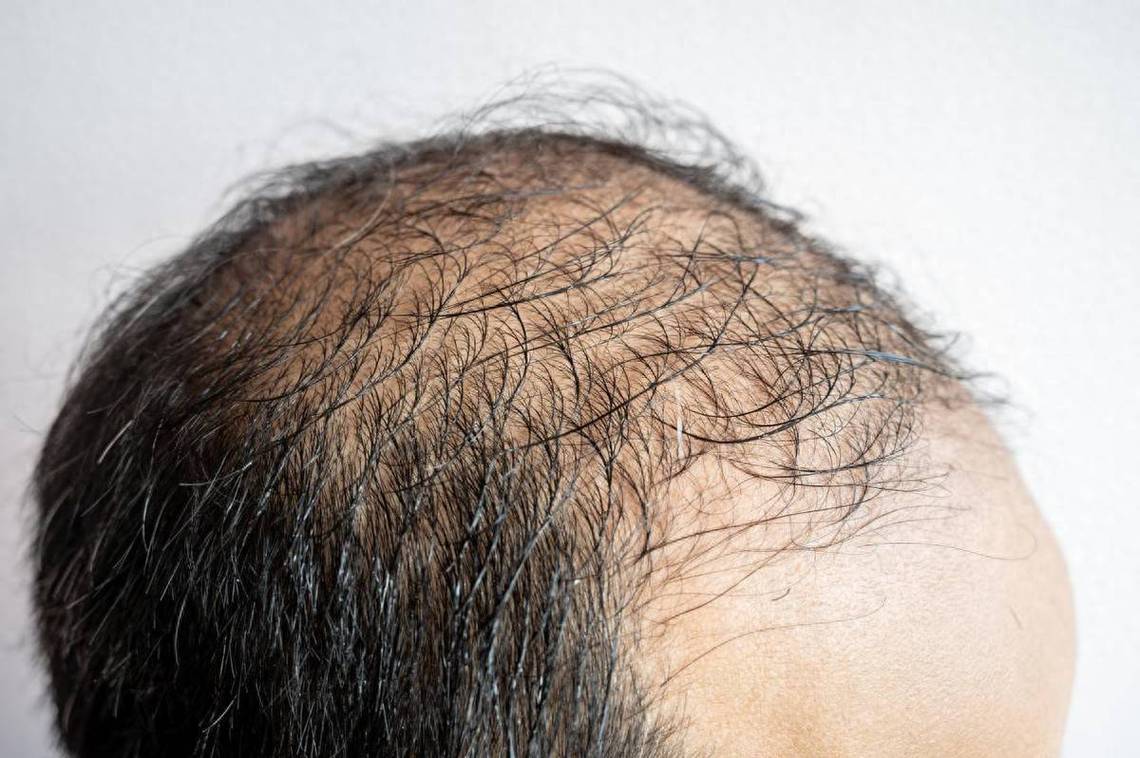
But then you look in the mirror six months later and realize your part is wider. Your ponytail is thinner. The top of your head is starting to look a little… translucent.
Here’s the truth nobody wants to say out loud: excessive hair loss isn’t just a vanity problem. It’s your body waving a red flag. And for most people, the underlying cause has nothing to do with genetics and everything to do with something they could actually fix.
🚨 How Much Hair Loss Is Actually “Too Much”?
First, let’s get one thing straight: losing 50–100 hairs per day is completely normal. Hair goes through a natural growth cycle — anagen (growing), catagen (transition), telogen (resting), and exogen (shedding). You’re supposed to shed some.
Where it becomes a problem:
- 🪮 You find significant clumps in your brush, shower drain, or pillow
- 📏 Your part is visibly wider than it used to be
- 👀 Your scalp is showing through at the crown or temples
- 🐕 Your ponytail feels noticeably thinner
- 🔄 The loss accelerates after a specific event (illness, surgery, emotional shock, significant weight loss)
If any of those sound familiar, you’re not imagining it. Something changed — and it’s worth finding out what.
😰 Cause #1: Telogen Effluvium — When Stress Literally Stops Your Hair

This is the most common cause of sudden, widespread hair thinning — and most people who experience it have no idea it has a name.
Telogen effluvium (TE) is a condition where a significant physical or emotional stressor pushes a large percentage of your hair follicles prematurely into the telogen (shedding) phase. Instead of growing, your hair falls out — often 2–4 months after the triggering event.
Common triggers:
- 🤒 A high fever or serious illness (COVID-19 triggered massive TE cases globally)
- 🏥 Surgery or hospitalization
- 😱 Major emotional trauma (breakups, grief, job loss — yes, even your divorce)
- 🚼 Childbirth (postpartum hair loss is TE, and it’s completely normal)
- 💊 Starting or stopping medications, especially antidepressants
- ⚖️ Rapid, significant weight loss
The mechanism: cortisol, your body’s primary stress hormone, directly inhibits hair follicle stem cells in the bulge region of the follicle. High cortisol → suppressed hair growth → accelerated shedding. The American Journal of Dermatology has documented this pathway extensively.
The good news about TE? It’s usually reversible. Once the stressor is removed and your body recovers, hair typically regrows within 6–12 months. But first, you have to actually remove the stressor — and many people don’t even know what triggered it.
🥗 Cause #2: Nutritional Deficiencies — Your Hair Is Starving

Hair is one of the fastest-growing tissues in the human body — which means it’s also one of the first to be sacrificed when the body is nutrient-deficient. Your body will always prioritize vital organs over your hair. So when nutrients are scarce, your hair gets nothing.
The most critical hair-related nutrients:
- Iron (Ferritin) — This is the #1 nutritional cause of hair loss in women, according to the Journal of Korean Medical Science. Low ferritin (even in the “normal” range) disrupts the hair cycle and prolongs telogen. Target: ferritin above 50–70 ng/mL for optimal hair growth
- Vitamin D — Hair follicle stem cells have Vitamin D receptors. Deficiency (below 30 ng/mL) is strongly associated with telogen effluvium and androgenetic alopecia. An estimated 1 billion people worldwide are deficient
- Zinc — Essential for hair follicle cell division and immune function. Zinc deficiency causes fragile, brittle hair and premature shedding
- Biotin (B7) — While biotin deficiency is rare, it’s critical for keratin production. Found in eggs, salmon, sweet potatoes, and nuts
- Protein — Hair is made of keratin, a protein. If you’re not getting enough protein (especially after gastric bypass surgery, extreme dieting, or vegan diets without proper planning), your body shuts down non-essential protein synthesis — including hair growth
- Selenium — Both deficiency AND excess can cause hair loss. Balance matters
Here’s the kicker: standard blood panels often miss these deficiencies. “Normal” iron levels might be 30 ng/mL — technically not anemic, but far below the threshold needed for healthy hair. Many doctors don’t know to check for optimal ranges.
🩺 Cause #3: Thyroid Disorders — The Silent Hair Thief

Your thyroid gland regulates metabolism, energy, and — crucially — the rate at which your cells divide. That includes the rapidly dividing cells in your hair follicles.
Both hypothyroidism (underactive thyroid) and hyperthyroidism (overactive thyroid) cause hair thinning, but they manifest differently:
- 🩸 Hypothyroidism: Hair becomes dry, brittle, coarse. Loss is diffuse and generalized. Often accompanied by fatigue, weight gain, cold intolerance, and constipation. Causes include Hashimoto’s thyroiditis (an autoimmune condition affecting 2% of Americans)
- 🔥 Hyperthyroidism: Hair becomes fine and silky. Loss is diffuse. Accompanied by anxiety, rapid heartbeat, heat intolerance, and weight loss
Thyroid-related hair loss is particularly insidious because:
- Most doctors only test TSH — not free T3, free T4, or thyroid antibodies
- “Normal” TSH ranges (0.4–4.0 mIU/L) often miss subclinical thyroid dysfunction
- Hair loss may be the only noticeable symptom in early thyroid disease
If your hair is falling out and you can’t explain why, a full thyroid panel should be at the top of your list.
🧬 Cause #4: Androgenetic Alopecia — The Genetic Factor
Yes, genetics. We have to talk about it. Androgenetic alopecia (pattern hair loss) is the most common cause of permanent hair thinning, affecting roughly 50 million men and 30 million women in the United States.
In men, it typically manifests as a receding hairline and crown thinning. In women, it’s usually diffuse thinning across the entire scalp — the part widens, the crown shows scalp, but the hairline generally holds.
The mechanism involves dihydrotestosterone (DHT) — a byproduct of testosterone that shrinks hair follicles in genetically susceptible individuals. The follicles don’t die; they just get smaller, producing thinner, shorter, lighter hairs (vellus hairs) until they eventually stop producing visible hair entirely.
Genetic hair loss is treatable — but only if you act early. Once a follicle has been miniaturized for years, it becomes increasingly difficult to revive. The window for intervention is narrow.
🔬 The Tests Your Doctor Probably Didn’t Run

Here’s the uncomfortable truth about hair loss diagnosis: most primary care physicians don’t know how to work it up properly. They’ll look at your scalp, say “it’s probably genetic,” and send you home with a prescription for minoxidil.
But hair loss has dozens of causes. You deserve a proper workup. Here’s what to ask for:
- 🩸 Full thyroid panel: TSH, free T3, free T4, reverse T3, TPO antibodies, thyroglobulin antibodies
- 🩸 Iron studies: Serum iron, ferritin, TIBC, % saturation (ferritin goal: 50–100 ng/mL for hair)
- 🩸 Vitamin D: 25-hydroxyvitamin D (goal: 50–80 ng/mL)
- 🩸 Zinc and selenium: Serum zinc, serum selenium
- 🩸 Biotin: Only if you’re taking high-dose biotin supplements (can interfere with thyroid lab results)
- 🩸 Hormones: Free and total testosterone, DHEA-S, androstenedione, estradiol, progesterone (for women)
- 🩸 Complete blood count (CBC): Rule out anemia
- 🔬 Scalp biopsy or trichoscopy: In persistent cases, a dermatologist can examine follicle health under magnification
✅ What Actually Works — And What Doesn’t

After diagnosis, here are the evidence-based treatments worth knowing about:
- Minoxidil (Rogaine) — The only FDA-approved topical treatment for androgenetic alopecia. Works by prolonging the anagen (growth) phase. Effective for both men and women. Must be used continuously or benefits reverse
- Finasteride/Dutasteride — Oral DHT blockers. Finasteride is FDA-approved for men; dutasteride is used off-label. For women, only in post-menopausal cases under close supervision due to teratogenicity
- Spironolactone — An aldosterone antagonist with anti-androgen properties. First-line treatment for female pattern hair loss. Requires monitoring of potassium and kidney function
- PRP (Platelet-Rich Plasma) — Injections of your own platelet-rich plasma into the scalp. Multiple studies show significant regrowth in androgenetic alopecia. Expensive, requires maintenance sessions
- Low-Level Laser Therapy (LLLT) — FDA-cleared devices (laser caps, helmets) that use red light to stimulate follicular activity. Moderate evidence; works best early in the process
- Nutritional correction — Correcting iron, vitamin D, and zinc deficiencies alone can reverse telogen effluvium completely
- Stress management — Cortisol regulation through sleep, exercise, meditation, and therapy addresses the root cause of stress-induced hair loss
💡 The Bottom Line: Listen to Your Hair
Hair loss is your body’s most visible distress signal. Unlike high blood pressure or high cholesterol — which silently damage your arteries for decades — your hair announces that something is wrong. Every single day.
The question is whether you’re going to keep treating it as a cosmetic problem, or start treating it as a diagnostic clue.
Because behind that thinning part might be:
- A thyroid disorder that’s also increasing your risk of heart disease
- An iron deficiency that’s making you exhausted and foggy
- A cortisol problem that’s affecting everything from your sleep to your immune system
- A nutritional gap that’s completely fixable once you know about it
Hair loss isn’t vanity. It’s biology. And biology always tells the truth.
Get tested. Get answers. And then do something about it.
Your hair is not just growing out of your head.
It’s growing out of your entire body — and your body is talking.
Have you experienced unexplained hair loss? What was the cause? Share your story below — it might be the sign someone else needs to finally get their labs done. 💬