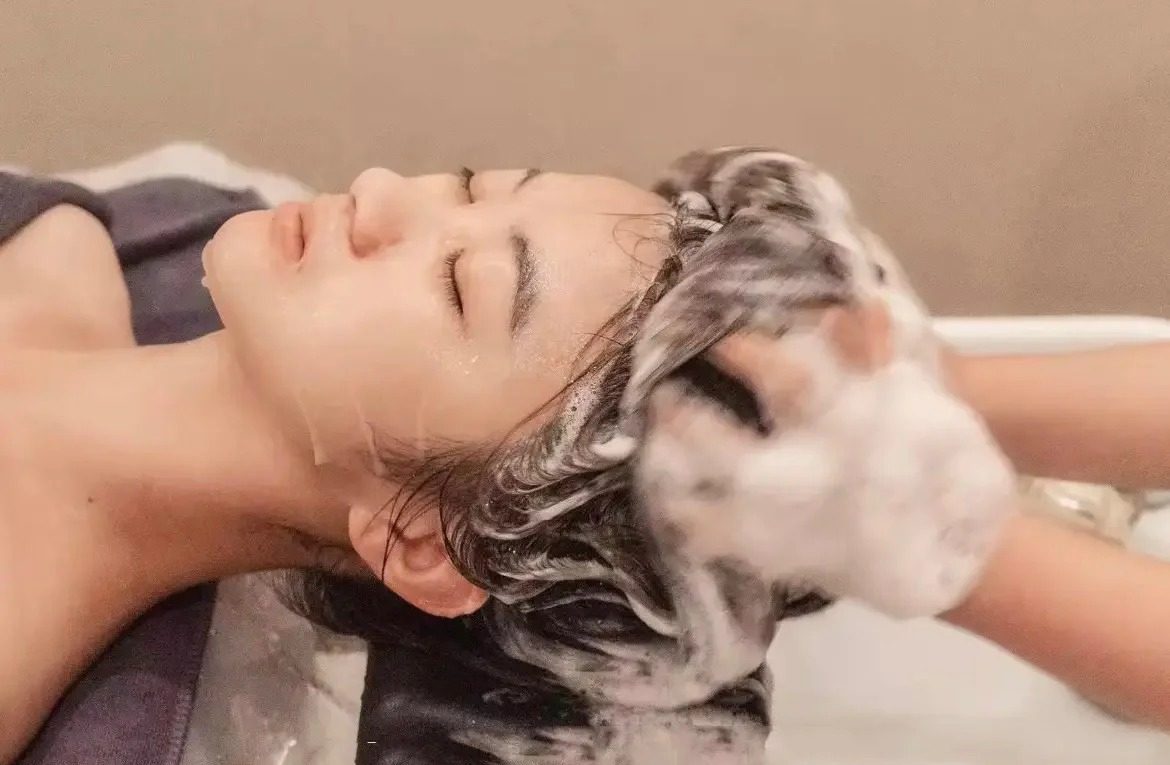
Losing Hair? The Problem Might Be How You Wash It
Confession time: for most of my adult life, I’ve been washing my hair wrong.
I’m talking about the full routine — wet hair, squeeze a glob of shampoo, aggressively scrub like I’m cleaning a cast-iron pan, rinse with water hot enough to cook pasta, wrap it in a towel turban so tight it could double as a tourniquet, and blast it with a hair dryer on the “volcano” setting.
And then I’d wonder why my hair was thinning and my scalp felt tight and irritated.
Here’s the thing: in America, we’re taught the basics of dental hygiene, skin care, even bowel regularity (thanks, yogurt commercials). But no one ever teaches us how to wash our hair properly. We just… figure it out. And most of us figure it out wrong.
After talking to three dermatologists and a trichologist (that’s a hair and scalp scientist — yes, that’s a real job), I learned that the way most people wash their hair is probably contributing to their hair loss — or at the very least, making it worse.
Here are the 7 mistakes you’re probably making.
❌ Mistake #1: Washing With Scalding Water

A hot shower feels amazing. I get it. After a long day, nothing beats standing under water that could peel wallpaper. Your muscles relax, the tension melts away, and for five minutes, life is perfect.
But your hair follicles hate it.
Hot water does three things that are devastating for hair health:
- 🔥 Strips natural sebum — your scalp produces a protective oil called sebum. Hot water dissolves it, leaving your scalp dry, tight, and vulnerable. The body responds by overproducing sebum to compensate — leading to greasy roots and dry ends (the worst of both worlds)
- 💥 Weakens the hair shaft — hot water causes the keratin proteins in your hair to expand. This makes the cuticle (the outer layer) lift slightly, making hair more porous, fragile, and prone to breakage
- 🩸 Inflames the scalp — repeated thermal stress on scalp tissue triggers low-grade inflammation. Chronic scalp inflammation is increasingly recognized as a contributor to telogen effluvium and premature follicle miniaturization
What to do instead: Wash your hair with lukewarm water. Not cold — you don’t need to suffer. Lukewarm. Warm enough to be comfortable but not steaming. If your scalp turns red, it’s too hot.
Pro tip: Finish with a cool water rinse (10–15 seconds). This helps seal the cuticle and adds natural shine.
❌ Mistake #2: Shampooing the Ends Instead of the Scalp

Here’s the most fundamental misunderstanding about shampoo: shampoo is for your scalp, not your hair.
Shampoo contains surfactants — cleansing agents designed to remove oil, sweat, dead skin cells, and product buildup. These surfactants are great for cleaning the scalp, where sebum and debris accumulate. But they’re terrible for your hair ends.
The ends of your hair are the oldest, driest, most fragile part of the strand. They’ve been exposed to months of sun, heat, styling, and environmental damage. Smoothing shampoo onto them strips whatever little moisture they have left, making them brittle and prone to splitting and breaking.
The right way:
- Wet hair thoroughly with lukewarm water (30–60 seconds — most people don’t wet long enough)
- Apply shampoo only to the scalp
- Massage gently with your fingertips (NOT your nails) in small circular motions
- Let the suds run down the rest of your hair as you rinse — that’s enough to clean the mid-lengths
- The ends don’t need shampoo at all
❌ Mistake #3: Using Your Nails Instead of Your Fingertips
You know that satisfying feeling of digging your nails into your scalp during a shampoo? The scratching, the exfoliating, the “I’m really cleaning in there” sensation?
Stop doing that.
Your scalp skin is thinner and more delicate than the skin on your face. When you scrub with your fingernails, you’re causing micro-abrasions — tiny scratches that you can’t see but that trigger an inflammatory response. Over time, this chronic micro-trauma can:
- 🩸 Cause scalp irritation and dandruff flare-ups
- 🔥 Create a chronic inflammatory environment that damages follicle health
- 🦠 Create entry points for bacterial and fungal infections
- 📉 Disrupt the follicle cycle, pushing more hairs into telogen (shedding)
What to do instead: Use the pads of your fingers — the soft, fleshy part below the knuckle. Apply firm but gentle pressure. Think of it as a massage, not a scouring.
❌ Mistake #4: Skipping Conditioner — Or Applying It Wrong
Conditioner is not optional if you’re washing your hair. Here’s why:
Shampoo opens the hair cuticle to clean. Conditioner closes it back up and restores moisture. If you shampoo without conditioning, you’re leaving the cuticle open — meaning your hair is in its most fragile, vulnerable state until the next wash.
The right application method:
- ✅ Squeeze excess water from hair first (too much water dilutes the conditioner)
- ✅ Apply from mid-lengths to ends — never on the scalp (it’ll make your roots greasy and can clog follicles)
- ✅ Leave on for 2–5 minutes (most people rinse immediately — give it time to actually penetrate)
- ✅ Rinse with cool water to seal the cuticle
Silicone-free conditioners are worth exploring if you wash frequently. Dimethicone and other silicones build up on the scalp over time and can contribute to follicular inflammation — though the research is still mixed on this point.
❌ Mistake #5: Aggressive Towel Drying

That towel turban? The aggressive rubbing? The twisting and wringing like you’re wringing out a mop?
When hair is wet, it’s at its weakest point. Water causes the hydrogen bonds in keratin to stretch, making each hair strand up to 50% more fragile than when it’s dry. That’s right — wet hair is essentially at half its normal strength.
Rubbing vigorously with a terrycloth towel causes:
- 💥 Mechanical breakage — the rough texture of terrycloth literally tears weakened hair strands
- 🧶 Cuticle damage — back-and-forth friction lifts and tears the cuticle layer
- 🌪️ Tangling — rough handling creates knots that require aggressive brushing to undo (more breakage)
What to do instead:
- Gently squeeze water from your hair using your hands (don’t wring)
- Wrap in a microfiber towel or a clean cotton T-shirt (both are far gentler than terrycloth)
- Press and blot — never rub
- Leave it wrapped for 10–15 minutes to absorb moisture passively
❌ Mistake #6: Brushing Wet Hair Aggressively
Wet hair + aggressive brushing = a fast track to hair loss that has nothing to do with your follicles and everything to do with mechanical damage.
The rules:
- ✅ Detangle from the bottom up — start at the ends and work your way to the roots. Never start from the top (you’ll push tangles down and create worse knots)
- ✅ Use a wide-tooth comb or detangling brush — fine-tooth combs and boar bristle brushes are for dry hair only
- ✅ Apply leave-in conditioner or detangling spray first — this adds slip and reduces breakage by up to 40%
- ✅ Be patient — work through tangles gently, section by section
- ❌ Never rip through a knot — hold the hair above the tangle with one hand and gently work it out with the other
❌ Mistake #7: Washing Too Often — Or Not Often Enough

This is the Goldilocks problem of hair care, and it depends heavily on your hair type:
- Fine, straight hair → oil travels quickly from scalp to ends. Washing every other day (or daily for very oily scalps) is usually appropriate
- Thick, wavy hair → every 2–3 days
- Curly or coily hair → once a week or less. The natural curl pattern prevents sebum from traveling down the strand, so curly hair tends to be drier
Washing too often strips the scalp’s protective barrier, leading to dryness, irritation, and reactive oil overproduction. Washing too infrequently allows sebum, sweat, dead skin cells, and product residue to build up — creating an environment where follicular inflammation and dandruff-causing yeast (Malassezia) thrive.
Both extremes contribute to hair thinning over time.
✅ The Right Way: A Step-by-Step Hair Wash Guide

Here’s the dermatologist-approved routine that actually protects your hair:
- Pre-wash (optional) — Apply a pre-shampoo oil treatment to dry hair and scalp. Coconut oil has been shown in clinical studies (Journal of Cosmetic Science, 2003) to reduce protein loss during washing better than mineral oil or sunflower oil
- Wet — Lukewarm water for 30–60 seconds. Thoroughly saturated hair absorbs shampoo more evenly and requires less product
- Shampoo — Apply to scalp only. Fingertips, small circles, 2–3 minutes. Rinse thoroughly
- Condition — Squeeze out excess water. Apply from mid-lengths to ends. Leave 2–5 minutes
- Rinse — Cool water for 10–15 seconds to seal the cuticle
- Dry — Microfiber towel or T-shirt. Press, don’t rub. Let air-dry when possible
- Detangle — Wide-tooth comb, bottom to top, with leave-in conditioner
- Style — Minimize heat. Use heat protectant when you must blow-dry. Keep the dryer on medium, 6+ inches from your head, constantly moving
💡 A Final Word
Not all hair loss is caused by how you wash your hair. If you have androgenetic alopecia, thyroid issues, nutritional deficiencies, or hormonal imbalances — fixing your shampoo technique won’t solve the problem. You need proper medical evaluation for that.
But here’s the thing: poor washing habits can make ANY type of hair loss worse.
If your follicles are already struggling — from genetics, stress, or nutritional gaps — the last thing you want to do is add mechanical damage, thermal injury, and scalp inflammation on top of it.
The right washing routine won’t regrow lost hair. But it will protect the hair you still have — and create the healthiest possible environment for new growth.
And honestly? Once you try doing it right, you’ll never go back. The difference in how your hair looks and feels is noticeable from the very first wash.
Your hair is already fighting enough battles.
Don’t let your shower routine be one of them.
What’s YOUR hair washing routine? Did you realize you were making any of these mistakes? Let me know in the comments — and share this with someone who’s been complaining about hair loss but hasn’t changed their routine yet. 💬